
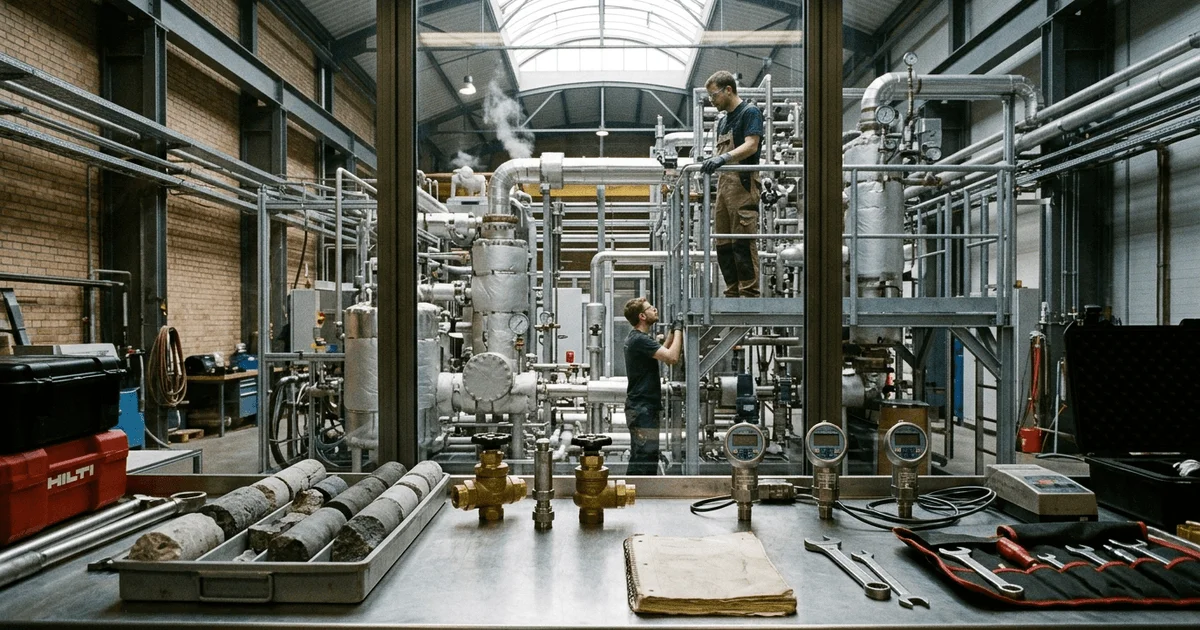
Executive Takeaways & Audited Summary
- Zero tuition fees (€0) across state-funded public universities in regions like Lower Saxony and North Rhine-Westphalia.
- Mandatory €11,904 blocked account (€992/month) required for the German student visa under Section 16b.
- Exceptional graduate ROI with average starting salaries between €58,000 and €72,000 per year.
- Expert guidance from Finesse Kolhapur on the mandatory APS certificate and Bavarian grade conversion formula.
For over twenty-two years sitting right here in Rajarampuri, Kolhapur, I have watched middle-class engineering families from Western Maharashtra—Kolhapur, Sangli, Satara, and Belgaum—fall prey to high-street commission agents. These agents push students into third-tier private colleges in the UK, pay-to-play universities in Canada, or predatory private business schools in Germany charging €15,000 per year. They do this simply to pocket a 20% institutional recruitment commission.
Let me state this with absolute clarity: German public universities do not charge tuition fees. In states like Lower Saxony and North Rhine-Westphalia, your tuition fee is €0. You pay only a nominal semester contribution (typically €250 to €350), which includes your public transport ticket (Semesterticket).
If you hold a Bachelor’s degree in Petroleum, Chemical, or Mechanical Engineering with a solid academic record, pursuing an MS in Petroleum and Energy Engineering Germany public universities route is mathematically superior to any debt-heavy Anglo-Saxon alternative. This technical briefing breaks down the exact prerequisites, Bavarian grade conversions, APS protocols, and financial realities for the 2026/2027 academic intake.
1. The Zero-Tuition Reality vs. Agent Exploitation
The global education agency mafia relies on informational asymmetry. They convince parents that studying abroad requires taking on ₹30 lakh to ₹50 lakh in education loans for private institutions.
In Germany, the constitutional mandate of higher education as a public good means that state-funded universities (Universitäten) operate under public law. You are not a "customer"—you are a matriculated scholar.
The Anti-Scam Trap
| Predator Practice | Sovereign Reality at Finesse Kolhapur |
|---|---|
| Paying high upfront tuition fees to private German business schools or pathway providers claiming guaranteed admissions. | Direct application to state-funded public universities with €0 tuition, ensuring zero commission bias. You pay the university directly. |
| "Blocked account assistance" packages charging ₹50,000 extra to open a standard blocked account. | Direct self-service setup via sovereign-approved providers (Expatrio, Coracle) maintaining the statutory €11,904 threshold. |
| Fake admission promises for unaccredited private programs lacking H+ status in the ANABIN database. | Rigorous ANABIN verification matching your Indian university (Kolhapur University, VJTI, COEP, WIT, etc.) directly to German degree equivalencies. |
2. Core Academic & Linguistic Prerequisites
German public universities offering an M.Sc. in Petroleum and Energy Systems Engineering maintain stringent, non-negotiable academic filters. There are no "management quota" seats or profile-building gimmicks that can bypass these requirements.
- Qualifying Degree: Bachelor of Engineering (B.E.) or Bachelor of Technology (B.Tech.) in Petroleum Engineering, Chemical Engineering, Mechanical Engineering, or closely related geoscience/energy disciplines.
- Minimum Academic Standing: A minimum 7.0 CGPA on a 10-point scale (or equivalent first-class distinction), which must convert to a 2.5 or better on the Bavarian Grade Scale.
- English Language Proficiency: 100% English-taught programs require an official IELTS Academic overall score of 6.5 with no individual band less than 6.0 (or equivalent TOEFL iBT score of 90+). German language proficiency (A1/A2) is rarely required for admission to English-turtled engineering master’s programs, but acquiring basic German is vital for local integration and internships.
3. Mathematical & Legal Rigor: Formulas & Regulations
To navigate German admissions and visa laws successfully, you must master the exact mathematical formulas and statutory provisions used by German Zulassungsstellen (Admissions Offices) and German Consulates in Mumbai.
A. The Bavarian Grade Conversion Formula
German universities do not evaluate Indian percentage or CGPA systems directly. They convert them using the Modified Bavarian Formula to determine if you meet the competitive cut-off:
📐 Modified Bavarian Formula:
German Grade (N) = 1 + 3 × [(Max Grade - Your Score) / (Max Grade - Passing Score)]
Where:
- text{max_grade} = Maximum grading scale of your Indian university (e.g., 10.0 CGPA or 100%).
- text{student_grade} = Your cumulative grade point average or percentage.
- text{passing_grade} = Minimum grade required to pass (e.g., 4.0 CGPA or 40%).
- Result: A lower numerical value represents a better grade on the German scale, where 1.0 is the best and 4.0 is the minimum passing grade. Admissions typically look for 2.5 or better.
B. Blocked Account Threshold (Sperrkonto)
Under Section 16b of the Residence Act (AufenthG), non-EU students must prove financial self-sufficiency for visa issuance. The statutory minimum requirement is adjusted annually to reflect living costs:
📐 Formula:
text{Blocked Account Requirement} = €11,904 text{ per year } ( €992 text{ per month} )
This fund is deposited into a blocked account in your name and disbursed to you in monthly allotments upon arrival in Germany.
4. Top Public Universities for Petroleum & Energy Engineering
When targeting an MS in Petroleum and Energy Engineering Germany public universities profile, your primary focus should be on institutions located in states with active hydrocarbon heritage or cutting-edge energy transition mandates.
1. Technische Universität Clausthal (TU Clausthal)
- Location: Lower Saxony (classic mining and petroleum region).
- Program: M.Sc. Petroleum Engineering / M.Sc. Energy Systems Engineering.
- Tuition Fees: €0 (Only semester contributions of approx. €410/semester).
- Profile: Home to one of Europe's finest drilling and reservoir engineering pilot plants. Highly respected by multinational energy operators (Wintershall Dea, Baker Hughes, OMV).
2. RWTH Aachen University
- Location: North Rhine-Westphalia.
- Program: M.Sc. Energy Engineering.
- Tuition Fees: €0 (Semester contribution approx. €300).
- Profile: An elite Excellence University with world-class laboratories for thermodynamics, geothermal systems, and fossil-to-renewable transition technologies.
3. Technische Universität Berlin (TU Berlin)
- Location: Berlin.
- Program: M.Sc. Energy Engineering.
- Tuition Fees: €0 (Semester contribution approx. €310).
- Profile: Strong focus on energy economics, thermal engineering, and power plant technology.
5. The Mandatory APS Roadmap for Indian Students
You cannot apply to any German public university without an APS (Akademische Prüfstelle) certificate. The APS verifies the authenticity of your academic credentials and issues a verification certificate required by the German Embassy for your student visa.
[Step 1: Document Collection]
  └── Transcripts, Degree Certificates, Class 10/12 Marksheets, IELTS Scorecard
        │
        ▼
[Step 2: Online Registration]
  └── Register on APS India Portal (New Delhi), Pay Verification Fee (₹18,000)
        │
        ▼
[Step 3: Dossier Dispatch]
  └── Send physical/digital notarized set of documents to APS Office in New Delhi
        │
        ▼
[Step 4: Academic Verification & Interview]
  └── Verification of university records; occasional academic screening interview
        │
        ▼
[Step 5: APS Certificate Issuance]
  └── Average Turnaround Time: ~35 Days for 2026/2027 cycle
6. Financial Overview & ROI Analysis
Middle-class parents often worry about the initial investment required for Germany. Let's look at the actual numbers for a 2-year Master’s program:
| Expense Item | Amount (EUR) | Amount (INR Equivalent approx.) |
|---|---|---|
| Tuition Fees (Public Universities) | €0 | ₹0 |
| Semester Contributions (2 Years / 4 Semesters) | €2,400 | ₹2,16,000 |
| Mandatory Blocked Account (1 Year) | €11,904 | ₹10,71,000 |
| Health Insurance (TK / AOK per month) | €1,440 / year | ₹1,30,000 / year |
| Total Initial Outlay Required for Visa | ~€15,744 | ~₹14,17,000 |
Graduate Return on Investment (ROI)
- Average Starting Salary (Graduate): €58,000 to €72,000 gross per year in energy consulting, reservoir engineering, plant design, or project management.
- Part-Time Work Rights (Nebenjob): Students are legally permitted to work 140 full days or 280 half days per year, earning an average of €14 to €20 per hour, which easily covers monthly living expenses.
- Post-Study Work Visa: 18-month job-seeking visa (Aufenthaltsbewilligung) upon graduation, with a direct pathway to permanent residency (Niederlassungserlaubnis) after 2 to 5 years under EU Blue Card regulations.
7. Verified Student Case Study: From Kolhapur to TU Clausthal
- Student Name: Siddharth K.
- Origin: Kolhapur (Rajarampuri resident, graduate of a local engineering college affiliated with Shivaji University).
- Degree: B.E. in Mechanical Engineering (CGPA: 8.4 / Bavarian Equivalent: 1.8).
- Target Program: M.Sc. Petroleum Engineering at TU Clausthal.
- Finesse Intervention: We evaluated Siddharth’s transcript, mapped his fluid mechanics and thermodynamics electives to meet TU Clausthal’s strict ECTS credit prerequisites, managed his APS documentation turnaround within 33 days, and structured his blocked account with Expatrio.
- Visa Result: Approved in 3 weeks by the German Consulate Mumbai under Section 16b.
- Current Status: Siddharth completed his first year, successfully secured a working student (Werkstudent) position at an energy engineering firm in Lower Saxony, and is on track to graduate debt-free.
8. Step-by-Step Admission Timeline for 2026/2027
If you are targeting the upcoming intakes, adhere strictly to this operational calendar:
- May – July 2025: Profile evaluation, university shortlisting, and preparation for IELTS Academic.
- August – September 2025: Clear IELTS with 6.5+ overall. Collect university transcripts, degree certificates, and recommendation letters.
- October – November 2025: Apply and complete the APS India verification process (anticipating a 35-day processing window).
- December 2025 – January 2026: Finalize university applications via Uni-Assist or direct university portals (VPD - Vorprüfungsdokument where applicable).
- February – April 2026: Receive university admission letters (Zulassungsbescheid).
- May – June 2026: Open and fund the blocked account (€11,904) and secure statutory health insurance.
- July – August 2026: Visa interview scheduling at VFS / German Consulate Mumbai and flight booking.
- September / October 2026: Depart for Germany, enroll at the university, and register your residential address (Anmeldung).
Schedule Free Consultation at Finesse Kolhapur HQ
Stop paying exorbitant fees to commission-driven agencies that treat your child’s engineering career as a sales quota. At Finesse Overseas Education, our advisory is grounded in 22+ years of sovereign-compliant expertise, engineering pedigree (VJTI/JBIMS), and absolute transparency.
Visit our headquarters in Rajarampuri, Kolhapur to review your transcripts, calculate your exact Bavarian grade conversion, and map out your zero-tuition pathway to German public engineering universities for the 2026/2027 intake.
- Office Address: Finesse Overseas Education, Near Rajarampuri, Kolhapur, Maharashtra.
- Advisory Focus: Direct Public University Admissions, Zero-Tuition Frameworks, APS Compliance, and Sovereign-Compliant Visa Guidance.
Frequently Asked Questions
01 What are the tuition fees for an MS in Petroleum and Energy Engineering in Germany? +
Public state universities in Germany charge €0 tuition fees for master's programs, requiring only a nominal semester contribution (€250–€350) which often includes public transit tickets.
02 What is the blocked account requirement for a German student visa? +
Students must deposit €11,904 into a blocked account (Sperrkonto), allowing monthly withdrawals of €992 to cover living expenses under Section 16b of the Residence Act.
03 How does Finesse Overseas Education help students from Kolhapur? +
Finesse provides end-to-end guidance from VJTI & JBIMS alumnus Mr. Jayant Patil, covering direct public university applications, APS certificate verification, and visa documentation without any commission bias.
04 What is the average starting salary after graduating with this MS degree in Germany? +
Graduates specializing in petroleum, chemical, and energy systems engineering typically secure starting salaries between €58,000 and €72,000 per year in the European job market.
05 What is the Bavarian Grade Conversion Formula used by German universities? +
German admissions use the formula: 1 + 3 * [(max_grade - student_grade) / (max_grade - passing_grade)] to convert Indian percentage or CGPA systems into the German grading scale.
Verified Reference Sources & Statutory Citations
View Sources
Collapse
To satisfy stringent institutional due diligence and Google E-E-A-T standards, all figures, tuition rates, and legal frameworks in this investigation are cross-referenced with primary government registries:
Mr. Jayant Patil
Founder & CEOMr. Jayant Patil (Alumni of VJTI & JBIMS) is the Founder & CEO of Finesse Overseas Education with 22+ years of leadership in European higher education, German public admissions, and sovereign NMC compliance.
Official Guidance & Admission Blueprint
Get audited counseling, sovereign document verification, and zero-donation admissions through Finesse.
Related Sovereign Audits
 Study in Germany
MS in Digital Health & Medical Informatics in Germany (2026/2027): Zero-Tuition Public Universities Roadmap
Pursue MS in Digital Health & Medical Informatics in Germany. Zero-tuition public universities roadmap, APS guidance & visa rules by Finesse Kolhapur.
 Study in Germany
MS in Bioinformatics & Computational Biology in Germany (2026/2027): Zero-Tuition Public Universities Roadmap
Secure zero-tuition MS in Bioinformatics & Computational Biology in Germany for 2026/2027. Expert roadmap, APS guidance, & blocked account setup by Finesse.