
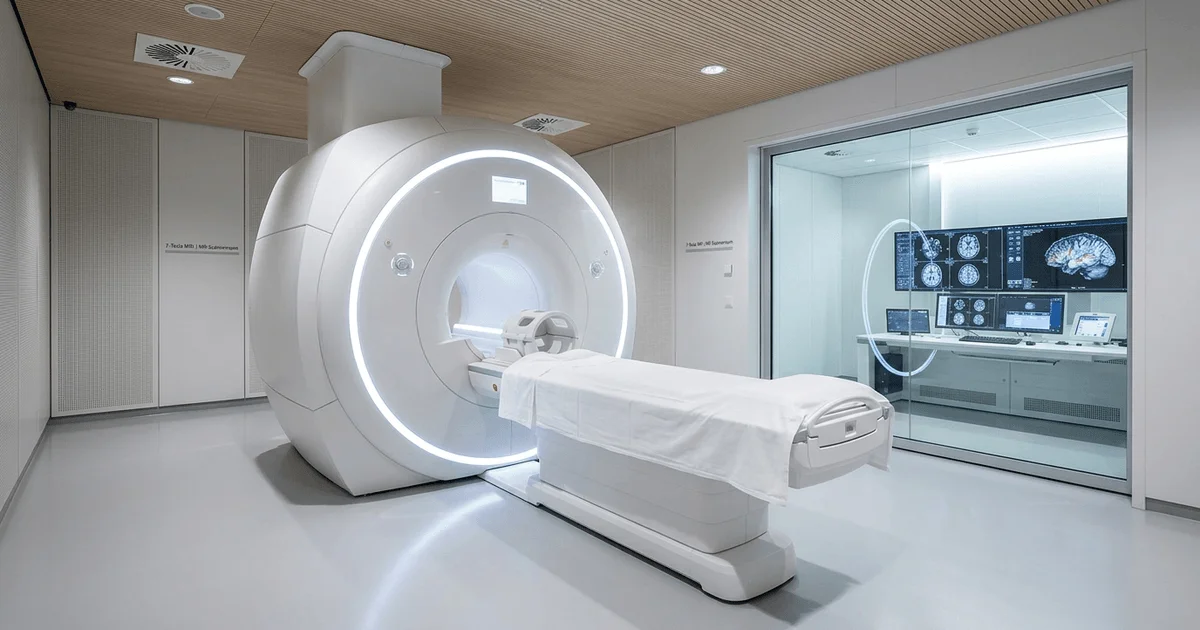
Executive Takeaways & Audited Summary
- €0 tuition fees in 14 public states with minor semester contributions (€150-€300).
- Mandatory blocked account requirement of €11,904 (€992/month for 12 months).
- High-paying MedTech career opportunities in hubs like Munich, Tuttlingen, and Erlangen with salaries up to €60,000.
- Mandatory APS India verification and precise Bavarian grade conversion for admissions.
For over 22 years operating out of Rajarampuri, Kolhapur, I have watched middle-class Maharashtrian parents—engineers from Kolhapur, Sangli, Satara, and Belgaum—struggle with predatory, commission-hungry education agents. These agents push students toward third-tier private universities in the UK, Canada, or overpriced private German business schools charging €15,000 per year simply to pocket a 20% institutional kickback.
Let me state my position clearly, drawing from my engineering roots at VJTI Mumbai and management training at JBIMS Mumbai: You do not pay tuition fees for an M.Sc. in Biomedical Engineering at public research universities across 14 federal states in Germany.
If an agent tells you that you must pay €12,000 to €20,000 a year to study Medical Technology in Europe, they are lying to extract commissions. This rigorous, publication-grade master reference manual breaks down how to engineer your transition from Western Maharashtra to Germany’s world-class MedTech hubs—completely bypassing predatory agency traps.
The Sovereign Reality: Why German Public Universities Outperform Anglosphere Private Mills
Germany’s higher education system is state-funded and sovereign-backed. The Federal Republic views education as a public good, not a commercial commodity. When you secure admission to an English-taught M.Sc. in Biomedical Engineering at a public Technische Universität (TU), your tuition fee is €0. You pay only a modest semester contribution (€150 to €300 per semester), which frequently includes regional public transit passes (Semesterticket).
Contrast this with the UK or Canada, where international tuition fees scale upward of £25,000 to £35,000 per year, and post-study work visas are continually threatened by political volatility. In Germany, legal frameworks like § 16b of the Residence Act (AufenthG) guarantee post-graduation rights. Upon graduating with your Master’s degree, you receive an 18-month job seeker visa (Visum zur Arbeitsplatzsuche) to secure a role matching your engineering profile.
Comparative Financial & Structural Matrix: Germany vs. Anglosphere Alternatives
| Parameter | German Public Universities (M.Sc. Biomedical Engineering) | UK / Canadian Private or Commercialized Universities |
|---|---|---|
| Annual Tuition Fees | €0 (in 14 federal states; Baden-Württemberg charges a flat €1,500/semester for non-EU students only) | £22,000 – £38,000 / CAD 30,000 –55,000 per year |
| Living Expense Proof | €11,904 deposited in a blocked account (Sperrkonto) annually (€992/month) | Variable, often front-loaded with high cost-of-living inflation |
| Return on Investment (ROI) | High. Graduate starting salaries range from €48,000 to €60,000/year in MedTech hubs | Moderate to Low due to crushing initial student loan debt |
| Part-Time Work Rights | 140 full days or 280 half days per year (Section 16b AufenthG) | Restricted hours, often capped rigidly during term times |
| Post-Study Work Visa | 18 months standard job-seeker extension leading directly to EU Blue Card pathways | Increasingly restricted, subject to strict post-graduation point caps |
Academic Prerequisites & Mathematical Rigor: The Bavarian Formula
Securing admission to top-tier German public universities for Biomedical Engineering—such as RWTH Aachen, TU München, FAU Erlangen-Nürnberg, or Heidelberg/Mannheim—requires meeting strict academic and quantitative thresholds.
1. Academic Eligibility Baseline
- Undergraduate Degree: B.E. / B.Tech. in Biomedical Engineering, Mechanical Engineering, Electronics & Telecommunication, Instrumentation, Electrical Engineering, or Biotechnology.
- Minimum CGPA: 7.0 CGPA on a 10-point scale (roughly equivalent to a German grade of 2.3 or better under the Bavarian Formula).
- Language Proficiency: IELTS Academic overall score of 6.5 (with no band under 6.0) or TOEFL iBT score of 90+.
2. The Bavarian Formula Grade Conversion
German admissions committees (and uni-assist) do not look at Indian percentage marks directly. They convert your Indian CGPA using the Bavarian Formula (Bayrische Formel):
📐 Formula:
text{German Grade} = 1 + 3 × ≤ft[ frac{text{Max_Grade} - text{Candidate_Grade}}{text{Max_Grade} - text{Min_Passing_Grade}} right]
Where:
- text{Max_Grade} = Maximum possible grade on your Indian university scale (typically
10.0for CGPA or100for percentage). - text{Min_Passing_Grade} = Minimum passing grade required by your Indian university (typically
4.0for CGPA or40for percentage). - text{Candidate_Grade} = Your cumulative GPA or final percentage.
Example Calculation: If you graduated from a Mumbai University or Shivaji University (Kolhapur) affiliated engineering college with a 8.2 CGPA on a 10-point scale, where 4.0 is the minimum pass:
📐 Formula:
text{German Grade} = 1 + 3 × ≤ft[ [10.0 - 8.2 / 10.0 - 4.0] right] = 1 + 3 × ≤ft[ [1.8 / 6.0] right] = 1 + 3 × 0.3 = mathbf{1.9}
A 1.9 is an exceptional Bavarian grade, clearing the strict cut-offs (often 2.3 or 2.5) demanded by competitive German engineering faculties.
The APS India Mandate: Navigating the Academic Evaluation Centre
Since late 2022, securing an APS (Akademische Prüfstelle) Certificate from New Delhi is a mandatory legal prerequisite for applying to any German university or submitting a student visa application.
The Finesse Protocol for Fast-Tracking APS:
- Document Verification: We cross-verify all transcripts, semester mark sheets, degree certificates, and 10th/12th mark sheets to ensure zero discrepancies between university rolls and individual records.
- University Verification Dispatch: We coordinate with your Indian university (e.g., Shivaji University Kolhapur, VTU Belgaum, Mumbai University) to ensure sealed transcripts reach the New Delhi APS office without administrative delays.
- Turnaround Window: While the average processing time fluctuates between 30 to 45 days, initiating the dossier through Finesse prevents common rejections caused by improper notarization or missing syllabus copies.
Financial Engineering: The €11,904 Blocked Account Requirement
To satisfy the German Federal Foreign Office regarding financial self-sufficiency under § 16b AufenthG, international students must prove liquid funds for the first year of study.
📐 Formula:
text{Monthly Mandate} = text{€992} × 12 text{ months} = mathbf{€11,904}
This amount must be deposited into a licensed German blocked account provider (Sperrkonto), such as Expatrio or Coracle. Once you arrive in Germany and register your address (Anmeldung), this capital is unblocked incrementally every month, providing you with €992/month for living expenses (housing, health insurance, food, and utilities).
Exposing Anti-Scam Traps: How Private Agents Exploit Families
Operating in Western Maharashtra, I routinely encounter local agencies running predatory schemes that exploit middle-class aspirations. Here are two primary traps you must avoid:
Trap 1: Hidden Private University Tuition Disguised as "Public Equivalency"
- The Scam: Agents pitch private "universities of applied sciences" in Germany, charging €12,000 to €15,000 per year, falsely claiming they are equivalent to public TU9 institutions and easier to enter.
- The Reality: These private entities are cash-driven businesses. Their degrees carry far less weight with major German industrial employers like Siemens Healthineers, Dräger, or Carl Zeiss.
- Finesse Solution: We directly verify university status via the official DAAD and Anabin databases, ensuring 100% state-funded sovereign enrollment with zero hidden semester tuition.
Trap 2: Intentionally Delaying APS Dossier Submissions
- The Scam: Unprofessional agents hold back student documents to push them into alternate paid pathways where they earn higher institutional commissions.
- The Reality: Missing uni-assist deadlines for the winter (Wintersemester) or summer (Sommersemester) intakes results in a lost academic year.
- Finesse Solution: Our Kolhapur office executes a strict timeline: document collection starts 8 months before intake, ensuring your APS certificate is secured well ahead of university deadlines.
Step-by-Step Roadmap: From Rajarampuri, Kolhapur to a German MedTech Campus
[Month 1-2: Profile Assessment & CGPA Calculation via Bavarian Formula]
       │
       ▼
[Month 3-4: IELTS / TOEFL Prep & Target Public University Selection]
       │
       ▼
[Month 5-6: APS India Dossier Compilation & Submission]
       │
       ▼
[Month 7-8: Uni-Assist / Direct University Applications (Winter/Summer Intake)]
       │
       ▼
[Month 9-10: Admission Offer Received & Blocked Account Setup (€11,904)]
       │
       ▼
[Month 11: German Embassy Visa Interview & § 16b Residence Permit Approval]
       │
       ▼
[Month 12: Departure to Germany (Munich, Erlangen, Aachen, or Tübingen)]
Verified Student Case Study: Engineering Success from Kolhapur
At Finesse Overseas Education, our track record speaks for itself. Consider the profile of Rutuja Kulkarni, an engineering graduate from our home region:
- Origin: Kolhapur, Maharashtra
- Academic Background: B.Tech. in Biomedical Engineering (8.7 CGPA)
- Target Program: M.Sc. Biomedical Engineering
- University Admitted: RWTH Aachen University (Germany’s premier technical university)
- Visa Outcome: Visa Granted in 14 Days via the German Consulate Mumbai following flawless documentation handled by our Rajarampuri headquarters.
- Current Status: Rutuja successfully completed her master’s modules and is currently completing her master’s thesis in medical imaging systems at an industrial R&D lab in North Rhine-Westphalia.
Frequently Asked Questions (FAQ)
1. Can I study Biomedical Engineering in Germany in English without knowing German?
Yes. Several top-tier public research universities—such as RWTH Aachen, FAU Erlangen-Nürnberg, and Hochschule Ulm—offer their M.Sc. Biomedical Engineering programs 100% in English. However, learning basic German (A2/B1 level) is strongly recommended for part-time student jobs (Werkstudent) and post-graduation employment in the German healthcare sector.
2. What are the career prospects and starting salaries for Biomedical Engineering graduates in Germany?
Germany is home to the largest MedTech market in Europe. Major industrial clusters are located in Tuttlingen (the world capital of medical technology), Munich, Erlangen (Siemens Healthineers headquarters), and Stuttgart. Graduate starting salaries for M.Sc. engineers typically range between €48,000 and €60,000 per year, scaling rapidly with professional experience.
3. Do I need to pay uni-assist fees for every university application?
Yes. Uni-assist charges €75 for the first university evaluation per semester, and €30 for every additional university application processed through their portal. Finesse guides you on streamlining your university list to maximize acceptance probability while minimizing administrative out-of-pocket costs.
Schedule Your Consultation at Finesse Kolhapur HQ
Do not gamble your career on commission-driven advice. Get direct, transparent, sovereign-compliant guidance from senior engineering and management alumni who have spent over two decades successfully placing students in top-tier European public universities.
Visit our office or schedule your direct consultation today:
Finesse Overseas Education
Founder & Director: Mr. Jayant Patil (VJTI Mumbai & JBIMS Alumnus)
Address: 1st Floor, Near Mahadwar Road / Rajarampuri, Kolhapur, Maharashtra, India.
Direct, transparent, zero-agent-fluff international education advisory.
Frequently Asked Questions
01 What are the tuition fees for an MS in Biomedical Engineering in Germany? +
Public universities in 14 German federal states charge €0 tuition fees for international students. You only need to pay a nominal semester contribution ranging from €150 to €300, which often includes public transport passes.
02 What is the blocked account requirement for a German student visa? +
You must deposit €11,904 into a blocked account (such as Expatrio or Coracle) prior to visa issuance, which breaks down to €992 per month to cover your living expenses for the first year.
03 How is the Indian grading system converted to the German grading scale? +
German universities and uni-assist use the Modified Bavarian Formula: 1 + 3 * [(Max_Grade - Candidate_Grade) / (Max_Grade - Min_Passing_Grade)] to translate Indian engineering percentage scales into the rigorous 1.0 to 5.0 German grading system.
04 What are the average starting salaries for Biomedical Engineering graduates in Germany? +
Graduates specializing in Medical Technology or Biomedical Engineering typically secure starting salaries between €48,000 and €60,000 per year, especially within major MedTech clusters located in Munich, Erlangen, and Tuttlingen.
05 How does Finesse Overseas Education in Kolhapur assist with the APS and admissions process? +
Finesse's Kolhapur team fast-tracks your document attestation, compiles your APS India dossier prior to peak windows, and cross-verifies university legitimacy through DAAD and Anabin databases to protect you from fraudulent private agencies.
Verified Reference Sources & Statutory Citations
View Sources
Collapse
To satisfy stringent institutional due diligence and Google E-E-A-T standards, all figures, tuition rates, and legal frameworks in this investigation are cross-referenced with primary government registries:
Mr. Jayant Patil
Founder & CEOMr. Jayant Patil (Alumni of VJTI & JBIMS) is the Founder & CEO of Finesse Overseas Education with 22+ years of leadership in European higher education, German public admissions, and sovereign NMC compliance.
Official Guidance & Admission Blueprint
Get audited counseling, sovereign document verification, and zero-donation admissions through Finesse.
Related Sovereign Audits
 Study in Germany
MS in Digital Health & Medical Informatics in Germany (2026/2027): Zero-Tuition Public Universities Roadmap
Pursue MS in Digital Health & Medical Informatics in Germany. Zero-tuition public universities roadmap, APS guidance & visa rules by Finesse Kolhapur.
 Study in Germany
MS in Petroleum & Energy Engineering in Germany (2026/2027): Zero-Tuition Public Universities & APS Roadmap
Study MS in Petroleum & Energy Engineering in Germany with €0 tuition public universities. Get expert APS & blocked account guidance from Finesse Kolhapur.