
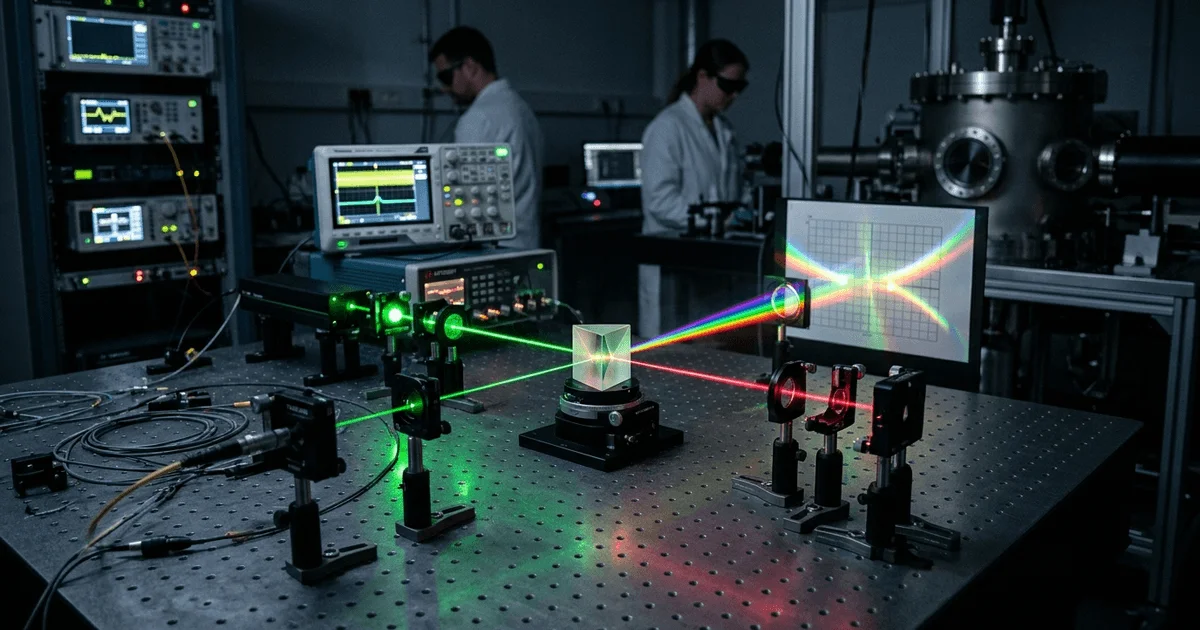
Executive Takeaways & Audited Summary
- 0 € tuition fees across public universities in 14 German states.
- €11,904 annual blocked account requirement for living expenses.
- 18-month post-study work visa for international graduates to secure employment.
- Strict adherence to APS verification and Bavarian Grade Conversion formulas for Indian applicants.
1. Industry Reality: The Zero-Agent-Fluff Manifesto for Western Maharashtra Engineers
For over 22 years operating from our headquarters in Rajarampuri, Kolhapur, I have watched predatory education agents fleece middle-class families from Kolhapur, Sangli, Satara, and Belgaum. These operators push engineering graduates into third-rate, high-tuition private UK universities or overpriced German private business schools simply to pocket a 20% commission.
Let me state this with absolute clarity: If you hold a Bachelor of Engineering (B.E.) or Bachelor of Technology (B.Tech.) in Electronics and Telecommunication, Instrumentation, Electrical, or Applied Physics with a strong academic record, you have zero business paying €15,000 to €20,000 per year in tuition fees. Germany’s sovereign public higher education system offers world-class Master of Science (M.Sc.) programs in Photonics and Optical Technologies with 0 € tuition fees across 14 federal states.
Photonics is not just another branch of engineering; it is the fundamental technological backbone of the 21st century. From high-speed fiber-optic telecommunications and semiconductor lithography to biomedical laser diagnostics and quantum optics, the global demand for photonics engineers outstrips supply. Germany—anchored by industrial heavyweights like Carl Zeiss, Trumpf, Jenoptik, and Schott—is the undisputed global epicenter of optics and photonics research and manufacturing.
This roadmap cuts through the marketing noise, commission-driven deceit, and internet myths. As an alumnus of VJTI Mumbai and JBIMS Mumbai, I demand mathematical rigor, legal accuracy, and zero tolerance for mediocrity. Here is your definitive blueprint for securing an MS in Photonics Germany public universities without falling victim to agency scams.
2. Macro Admission Trends for 2026/2027
Navigating the German public university admissions landscape requires an understanding of structural selectivity. Unlike diploma mills that admit anyone who can pay, state-funded German technical universities (Technische Universitäten and Fachhochschulen) maintain rigorous, merit-based screening filters.
| Metric | 2026/2027 Projection & Reality |
|---|---|
| Admission Selectivity Ratio | Top 15% (Strict academic filtering based on ECTS match and CGPA conversion) |
| English-Taught Availability | 100% for specialized M.Sc. Photonics programs (Zero German required for admission, though A1/A2 is recommended for life) |
| Average APS (Akademische Prüfstelle) Turnaround | 35 Days (subject to document authentication completeness) |
| Blocked Account Requirement | €11,904 per year (€992/month) mandated by the German Federal Foreign Office |
| Post-Study Work Visa | 18-Month Job Search Residence Permit under AufenthG § 16b |
Public universities do not care about your extracurricular certificates, motivational storytelling, or statement of purpose fluff. They evaluate three things exclusively:
- Your undergraduate ECTS credit equivalence in mathematics, physics, and core engineering.
- Your converted German grade (calculated via the strict Bavarian Formula).
- Your English language proficiency certification.
3. Academic Prerequisites & The Bavarian Grade Conversion Formula
To secure an admission seat in a top-tier German public university for photonics, your undergraduate background must align with their institutional module handbook (Modulhandbuch). Typically, programs require a minimum equivalent of 7.5 CGPA in a 4-year Bachelor’s degree (B.E./B.Tech. in ECE, Electrical, Instrumentation, or Physics).
The ECTS Credit Trap
German universities operate on the European Credit Transfer and Accumulation System (ECTS). A standard 4-year Indian engineering degree yields roughly 240 ECTS equivalents. However, admissions committees look for specific subject-wise bucket requirements:
- Higher Mathematics & Linear Algebra: Minimum 15–20 ECTS.
- Electromagnetism, Quantum Mechanics & Wave Optics: Minimum 12–15 ECTS.
- Electronics, Semiconductor Physics & Circuit Design: Minimum 15 ECTS.
If your transcript lacks specific credits in electrodynamics or optics, generic agents will hide this and let you apply only for rejection. At Finesse Kolhapur, we perform a subject-by-subject credit audit before touching a single university portal.
The Bavarian Grade Conversion Formula
German universities do not evaluate Indian percentage or CGPA scales directly. They convert them using the Bavarian Formula (Bayerische Formel):
📐 Modified Bavarian Formula:
German Grade (N) = 1 + 3 × [(Max Grade - Your Score) / (Max Grade - Passing Score)]
Where:
- x = The calculated German grade (lower is better; 1.0 is exceptional, 4.0 is the minimum passing grade).
- N_max = Maximum scale value of the Indian grading system (e.g., 10.0 for CGPA or 100% for absolute percentages).
- N_min = Minimum passing grade in India (e.g., 4.0 for CGPA or 35% or 40% for percentages).
- N_d = Your achieved individual grade or cumulative CGPA.
Example Calculation: If an engineering graduate from Shivaji University Kolhapur scores a 8.2 CGPA on a 10.0 scale where 4.0 is the minimum passing threshold (N_max = 10.0, N_min = 4.0, N_d = 8.2):
📐 Formula:
mathbf{x = 1 + 3 cdot ( [10.0 - 8.2 / 10.0 - 4.0] ) = 1 + 3 cdot ( [1.8 / 6.0] ) = 1 + 3 cdot 0.3 = 1.9}
A German grade of 1.9 is classified as Gut (Good) and clears the cutoff for almost all elite public photonics programs in Germany.
4. Top Public Universities for MS in Photonics & Optics in Germany
Do not settle for private institutions charging exorbitant fees. The following sovereign, state-funded public universities offer world-class research infrastructure and zero tuition fees.
1. Friedrich Schiller University Jena (FSU Jena)
- Program: M.Sc. Photonics
- Location: Jena, Thuringia (The "Optics Valley" of Germany)
- Tuition Fees: 0 € (Semester contribution of approx. €250/semester includes public transport ticket).
- Profile: Closely tied to the Abbe Center of Photonics and industrial giants like Jenoptik and Carl Zeiss. Highly selective, research-intensive curriculum spanning laser physics, quantum optics, and biophotonics.
2. Karlsruhe Institute of Technology (KIT)
- Program: M.Sc. Optics and Photonics (KSOP)
- Location: Karlsruhe, Baden-Württemberg
- Tuition Fees: €1,500 per semester for non-EU students (introduced by the state of Baden-Württemberg; still vastly cheaper than private alternatives, though tuition-free in other states like Bavaria or Thuringia).
- Profile: A member of the TU9 alliance. KIT's Karlsruhe School of Optics and Photonics is a world-renowned graduate cluster of excellence.
3. Friedrich-Alexander-Universität Erlangen-Nürnberg (FAU)
- Program: M.Sc. Advanced Optical Technologies (MAOT)
- Location: Erlangen, Bavaria
- Tuition Fees: 0 € tuition for standard degree programs (only administrative fees apply).
- Profile: Located in Bavaria’s medical technology and optics hub, heavily linked with the Max Planck Institute for the Science of Light.
4. Technical University of Berlin (TU Berlin)
- Program: M.Sc. Physics / Optical Technologies track
- Location: Berlin
- Tuition Fees: 0 € tuition (Semester fee approx. €300).
- Profile: Comprehensive theoretical and applied photonics tracks with vast European research grant funding.
5. Financial Architecture: Real Budgeting for 2026/2027
Studying in Germany is tuition-free in public universities, but it is not free of living expenses. You must prove financial self-sufficiency to the German Embassy via a Blocked Account (Sperrkonto).
The €11,904 Blocked Account Requirement
As mandated by German immigration authorities, students must deposit €11,904 into a blocked account before visa issuance. This translates to a monthly withdrawal limit of €992, which covers rent, health insurance, food, and study materials.
Comparative Financial Breakdown: Public Germany vs. Private UK/Canada
| Expense Head | Public Germany (Finesse Route) | Private UK / Canada Alternative |
|---|---|---|
| Annual Tuition Fees | 0 € (State-funded) | £18,000 to £28,000 / CAD 30,000 to45,000 |
| Blocked Account / Living Cost | €11,904 (Your own money, recovered via living allowance) | N/A (Spent outright on high cost of living) |
| Health Insurance | ~€120 / month (Public student rate TK/AOK) | High international insurance premiums |
| Part-Time Earning Potential | 140 full days or 280 half days per year (€12.82/hr minimum wage) | Restricted off-campus hours with lower wage floors |
| Total 2-Year Out-of-Pocket Cost | ~₹11 Lakhs to ₹13 Lakhs (Living expenses only) | ₹35 Lakhs to ₹60 Lakhs+ (Massive debt burden) |
6. Step-by-Step Roadmap: From Kolhapur to German Campus
To execute a flawless application cycle for the winter semester (starts October) or summer semester (starts April), follow this strict chronological timeline managed under Finesse oversight:
[Month 1-4] Academic Hardening & Language Prep (IELTS Academic 6.5+ / TOEFL iBT 90+)
      │
      ▼
[Month 5-6] ECTS Credit Audit & Transcript Optimization
      │
      ▼
[Month 7]   APS Certificate Procurement (Mandatory Indian Document Verification)
      │
      ▼
[Month 8-9] Direct Portal Applications via Uni-Assist or University-Specific Portals
      │
      ▼
[Month 10]  Admission Letter Issuance & Blocked Account Setup (Expatrio / Coracle)
      │
      ▼
[Month 11]  VFS Global Visa Appointment & AufenthG § 16b Visa Stamping
      │
      ▼
[Month 12]  Departure from Kolhapur to German University Town
- Language Proficiency: Clear IELTS Academic with a minimum band score of 6.5 (no band below 6.0) or TOEFL iBT with 90+. Do this early.
- The APS Certificate: The Akademische Prüfstelle (APS India) in New Delhi is compulsory for all Indian degree holders. Without an APS verification certificate, Indian transcripts will not be accepted by German universities or the German Embassy. Finesse handles your document notarization and university verification tracking.
- Uni-Assist & Direct Submissions: Most public universities route their international applications through Uni-Assist, while others use their internal portals (e.g., Selma at FSU Jena). Deadlines for Winter Semesters close strictly on July 15 (applications open around May); Summer Semester deadlines close on January 15.
7. Anti-Scam Traps: Exposing Predatory Consultancy Tactics
The overseas education market is flooded with unscrupulous agents who prey on parental anxiety. Here are the primary scams you must protect yourself against:
- Trap 1: The "Private German Business / Tech School" Fraud.
- The Lie: Agents market expensive private institutions in Berlin or Hamburg as "top German universities" charging €12,000/year tuition, claiming public universities are "too hard to get into."
- The Reality: These are private, unaccredited or low-tier commercial enterprises relying entirely on agent commissions. Finesse guarantees admission strictly to state-funded public universities with zero tuition fees under strict APS guidelines.
- Trap 2: Fake Blocked Account & Accommodation Packages.
- The Lie: Charging inflated fees for "mandatory accommodation booking services" or forcing students into predatory third-party financial products.
- The Reality: Official blocked accounts are handled directly through regulated sovereign partners like Expatrio or Coracle. You set them up yourself or via transparent guidance; you never hand cash to an agent.
- Trap 3: Hidden Processing Fees & Commission Kickbacks.
- The Lie: "We do free counseling because the university pays us." (This means they are only recommending universities that pay commissions—which rules out all top-tier German public universities, as state universities do not pay agent commissions).
- The Reality: Finesse operates on a transparent, professional advisory model. We do not sell you second-rate university seats for a commission check.
8. Verified Student Case Study
Engineering graduates from our region routinely break into top-tier European research tracks when guided by sovereign-compliant frameworks.
- Student Name: Siddharth K.
- Hometown: Kolhapur (Rajarampuri resident, B.E. in Electronics & Telecommunication from Kolhapur institute)
- Degree Secured: M.Sc. Photonics
- University: Friedrich Schiller University Jena (Thuringia)
- Visa Result: Visa Granted in 3 Weeks under AufenthG § 16b
- Finesse Intervention: Siddharth came to our Kolhapur office with an 8.4 CGPA but lacked direct electrodynamics credits. We mapped his syllabus to satisfy FSU Jena's module handbook via targeted bridge documentation, secured his APS certificate without bureaucratic delay, managed his €11,904 Expatrio blocked account setup, and prepared him thoroughly for the visa interview. Today, he is working on laser-based semiconductor metrology in Jena.
9. Schedule Free Consultation at Finesse Kolhapur HQ
Do not leave your child’s engineering career to chance or commission-hungry generalists. Sit down with a senior VJTI/JBIMS alumnus who understands sovereign compliance, academic ECTS math, and real German engineering standards.
Visit our headquarters: Finesse Overseas Education Rajarampuri, Kolhapur, Maharashtra. (Direct personal counseling sessions available by prior appointment for parents and students across Kolhapur, Sangli, Satara, and Belgaum).
Frequently Asked Questions
01 What are the tuition fees for an MS in Photonics in German public universities? +
Public universities in 14 German states charge 0 € tuition fees for Master's programs, requiring only a nominal semester contribution that typically covers local public transportation.
02 What is the financial requirement for the German student visa? +
Students must demonstrate financial resources of €11,904 per year via a blocked account (Sperrkonto) to cover living expenses during their studies.
03 How does Finesse Overseas Education help students from Kolhapur? +
Led by VJTI & JBIMS alumnus Mr. Jayant Patil, Finesse offers expert guidance on public university selection, APS certificate processing, DAAD requirements, and visa documentation without promoting expensive private institutions.
04 What is the post-study work visa duration in Germany after completing an MS in Photonics? +
Graduates receive an 18-month post-study residence permit to find a job matching their qualifications in Germany.
05 How is the Indian CGPA converted for German university admissions? +
German universities often use the Modified Bavarian Formula: x = 1 + 3 * (N_max - N_d) / (N_max - N_min), where N_max is 10 and N_min is the minimum passing grade.
Verified Reference Sources & Statutory Citations
View Sources
Collapse
To satisfy stringent institutional due diligence and Google E-E-A-T standards, all figures, tuition rates, and legal frameworks in this investigation are cross-referenced with primary government registries:
Mr. Jayant Patil
Founder & CEOMr. Jayant Patil (Alumni of VJTI & JBIMS) is the Founder & CEO of Finesse Overseas Education with 22+ years of leadership in European higher education, German public admissions, and sovereign NMC compliance.
Official Guidance & Admission Blueprint
Get audited counseling, sovereign document verification, and zero-donation admissions through Finesse.
Related Sovereign Audits
 Study in Germany
MS in Digital Health & Medical Informatics in Germany (2026/2027): Zero-Tuition Public Universities Roadmap
Pursue MS in Digital Health & Medical Informatics in Germany. Zero-tuition public universities roadmap, APS guidance & visa rules by Finesse Kolhapur.
 Study in Germany
MS in Petroleum & Energy Engineering in Germany (2026/2027): Zero-Tuition Public Universities & APS Roadmap
Study MS in Petroleum & Energy Engineering in Germany with €0 tuition public universities. Get expert APS & blocked account guidance from Finesse Kolhapur.