
Executive Takeaways & Audited Summary
- 0 € Tuition Fee in state-funded public universities across 14 German states for M.Sc. in Quantum Computing and Quantum Technology.
- Mandatory €11,904 blocked account requirement per year for living expenses under German immigration laws.
- 18-month post-study work visa allowing engineering and science graduates to secure high-tech R&D roles.
- Strict requirement for academic evaluation via APS India and uni-assist grade conversion using the Bavarian Formula.
For twenty-two years sitting at our desk here in Rajarampuri, Kolhapur, I have watched middle-class engineering and physics parents from Western Maharashtra—Kolhapur, Sangli, Satara, and Belgaum—fall prey to slick-talking education agents. These operators push vulnerable students into high-fee, third-tier private colleges in the UK, Canada, or private German business schools simply to pocket a 20% commission. When a bright B.Tech. graduate from MIT or KIT Kolhapur tells me they want to study Quantum Computing, the last thing they need is a debt-laden certificate from a private diploma mill charging €15,000 a year.
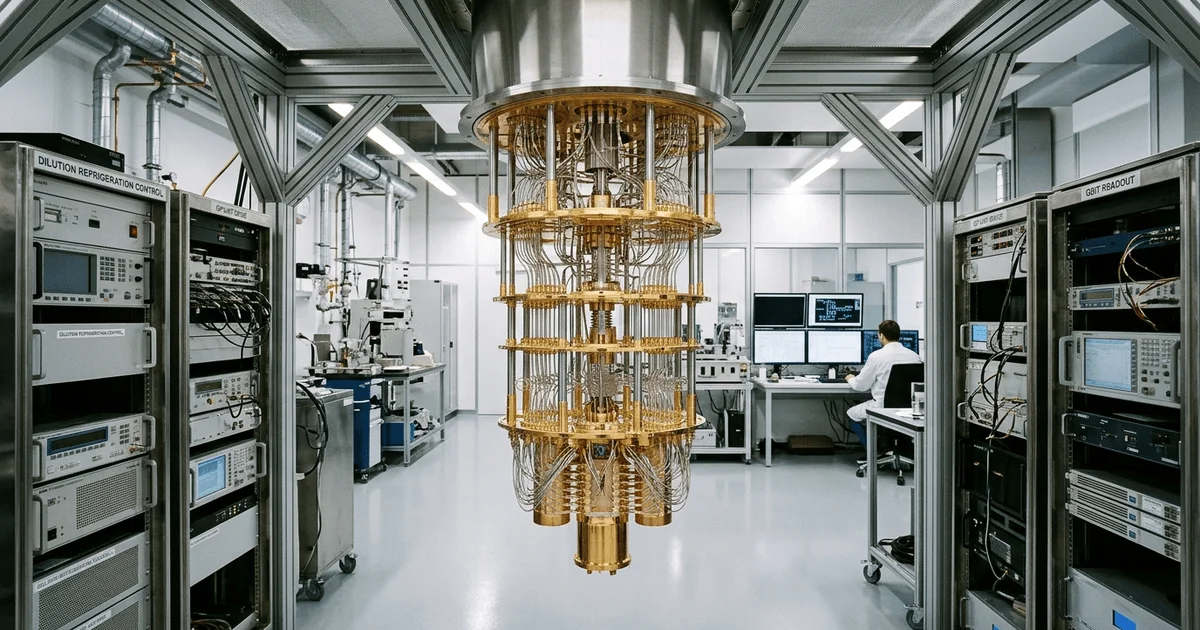
Quantum Information Science, Quantum Cryptography, and Quantum Hardware Engineering are deep-tech disciplines. They require state-of-the-art cleanrooms, cryostats, superconducting circuit fabrication facilities, and multi-million-euro synchrotron access. These resources do not exist in rented commercial-complex campuses run by for-profit enterprises. They exist exclusively inside German state-funded public research universities tightly coupled with the Max Planck Society, the Fraunhofer-Gesellschaft, and the German Aerospace Center (DLR).
Germany remains one of the few sovereign jurisdictions offering an MS in Quantum Computing Germany public universities pathway with 0 € tuition fees across 14 federal states. This exhaustive guide cuts through the commercial noise, breaks down the mathematics of university admissions, and lays down the exact bureaucratic blueprint for your transition from a local engineering college in Maharashtra to a high-tech R&D lab in Stuttgart, Munich, or Berlin.
The Economics of Zero-Tuition Public Higher Education
Let us address the financial reality of studying abroad without sugar-coating. In commercial agency offices across Pune and Mumbai, counselors routinely pitch UK masters programs costing £25,000 to £35,000 in tuition alone, alongside Canadian options pushing CAD 40,000/year. For a middle-class family liquidating ancestral land or taking out high-interest non-collateral education loans, this traps the student in a race against time to service debt rather than focus on quantum algorithms or hardware architecture.
German public universities operate under a constitutional mandate where education is treated as a public good, not a commercial commodity. Out of the 16 federal states in Germany, 14 maintain 0 € tuition fees for consecutive master's degree programs for both domestic and international students.
Note on Baden-Württemberg: Institutions in this state (such as the University of Stuttgart) charge a nominal administrative fee of €1,500 per semester (€3,000 per year) for non-EU students. Compared to Anglo-Saxon markets, this is negligible. Furthermore, Bavaria enacted legislation in late 2023 allowing select technological universities to introduce tuition fees for non-EU students, but premier public research institutions like TU Munich (TUM) and Ludwig-Maximilians-Universität (LMU) have calibrated their fee structures or structured fee-waiver frameworks for high-merit STEM applicants.
Living Expenses & The Blocked Account Reality
While tuition is effectively zero, the German government requires financial proof through a Sperrkonto (Blocked Account) to ensure students can sustain themselves without relying on illegal off-campus employment.
- Mandatory Blocked Amount: As per current Federal Foreign Office (Auswärtiges Amt) regulations, the requirement is €11,904 per year (or €992 per month).
- Withdrawal Limit: Once you land in Germany and open a student current account (Girokonto), you can withdraw a maximum of €992 per month.
- Working Rights: Under Aufenthaltsgesetz (Residence Act) § 16b, international students are legally permitted to work 140 full days or 280 half days per year. Working as a HiWi (Academic Research Assistant) at your university's Institute for Theoretical Physics or Quantum Optics not only pays an average of €14 to €18 per hour but embeds you directly into European Union-funded research consortia.
Academic & Linguistic Prerequisites
Quantum Computing is not a generic software engineering master's program. It is an uncompromising intersection of advanced quantum mechanics, solid-state physics, complex linear algebra, tensor calculus, and quantum information theory. Admissions committees at German public universities (which screen thousands of international applications via uni-assist or direct university portals) enforce strict prerequisite mapping.
Core Eligibility Benchmarks
- Academic Performance: Minimum 7.5 CGPA (or equivalent 75% aggregate) in a B.Tech./B.E. in Computer Science, Electronics & Communication, Electrical Engineering, or a B.Sc./M.Sc. in Physics.
- Foundational Coursework: Transcripts must explicitly reflect rigorous coursework in:
- Linear Algebra (Eigenvalues, Eigenvectors, Hilbert Spaces)
- Differential Equations & Complex Analysis
- Quantum Mechanics or Modern Physics (Wave functions, Schrödinger equation, operators)
- Basic Data Structures, Algorithms, and Python/C++ programming proficiency (Qiskit, Cirq, or Pennylane exposure is heavily favored).
- Language Proficiency:
- English-Taught Programs: IELTS Academic band score of 6.5 (with no band under 6.0) or TOEFL iBT minimum score of 90. German language proficiency (A1/A2) is not mandatory for admission to English-taught tracks, though acquiring basic conversational German is essential for daily survival and post-study integration.
The Bavarian Formula & Grade Conversion Mechanics
German university admissions committees do not evaluate Indian percentage scales or CGPA formats directly. They convert every international academic record into the German grading scale using a standardized mathematical algorithm known universally as the Modified Bavarian Formula.
The Bavarian Formula
📐 Modified Bavarian Formula:
German Grade (N) = 1 + 3 × [(Max Grade - Your Score) / (Max Grade - Passing Score)]
Where:
- max_grade: The maximum grade possible in your Indian university system (e.g., 10.0 CGPA or 100%).
- passing_grade: The minimum grade required to pass (e.g., 4.0 CGPA or 40%).
- achieved_grade: Your cumulative CGPA or percentage.
Understanding the German Scale
- 1.0 to 1.5: Sehr Gut (Very Good - Highly competitive; required for elite programs like TU Munich or Heidelberg).
- 1.6 to 2.5: Gut (Good - Meets cutoff criteria for most public universities).
- 2.6 to 4.0: Befriedigend to Ausreichend (Satisfactory to Sufficient).
- Passing Threshold: Anything above 3.0 on the German scale results in rejection.
Finesse Protocol: When we evaluate student transcripts at our Kolhapur headquarters, we run this exact conversion before touching a single university portal. If a student's converted grade sits at 2.4, we do not waste time applying to restricted-access (Numerus Clausus) programs requiring 1.7. We target institutions where profile-based holistic evaluations or entrance examinations bridge the gap.
APS Certificate: The Non-Negotiable Prerequisite
You cannot apply for a German student visa, nor can many universities process your application without an APS (Akademische Prüfstelle) Certificate. Administered by the German Embassy in New Delhi, the APS verifies the authenticity of your school leaving certificates, undergraduate degree, and university transcripts before your file ever reaches Germany.
The APS Roadmap for Indian STEM Graduates
- Online Registration: Create an account on the official APS India portal and pay the mandatory fee (currently INR 18,000).
- Document Submission: Mail physical notarized copies of your 10th marksheet, 12th marksheet, Bachelor's degree certificate, all semester transcripts, and your language test scorecards to the APS office in New Delhi.
- Verification Process: APS officers verify your academic records directly with your Indian university (e.g., Shivaji University Kolhapur, Pune University, or autonomous institutes like VJTI/ICT).
- Interview/Check: While engineering graduates typically clear verification via document authentication, academic checks can occasionally involve a verification call or interview.
- Turnaround Timeline: As of 2026/2027 admissions cycles, the average APS turnaround is approximately 35 days from the date physical documents reach New Delhi.
Critical Warning: Never wait for your final semester results to initiate your APS file. Apply the moment your penultimate semester marksheets are available. An unverified APS status is the #1 reason prospective students miss university application deadlines (Bewerbungsfrist).
Exposing the Private University Scam: Anti-Scam Traps
For years, predatory education agencies operating across tier-2 and tier-3 Indian cities have weaponized misinformation about German education. Let us expose their primary traps so you can protect your capital and your career.
| Scam Trap Executed by Agents | Sovereign Reality & Legal Facts | Finesse Corrective Action |
|---|---|---|
| Pushing Private Business/Tech "Universities" charging €12,000 to €18,000/year for degrees in "Digital Technology Management" or "Applied AI". | These are private, profit-driven institutions lacking state funding, often holding poor institutional reputation among German employers. | Finesse strictly maps applications to 100% state-funded public universities recognized under the official anabin database with an H+ rating. |
| Fake "Conditional Admission" Packages forcing students into expensive, unaccredited German language schools in India before enrollment. | Public universities with English-taught quantum programs require direct proof of English proficiency, not arbitrary private coaching certificates. | Direct enrollment into public university programs using official university portals (Uni-Assist or Campus Management). |
| Misrepresenting Visa Rules by claiming students can work full-time immediately to pay their tuition and living expenses. | Under AufenthG § 16b, students are restricted to 140 full days/280 half days. Attempting to survive on unauthorized full-time labor leads to immediate deportation. | Transparent financial counseling utilizing government-mandated blocked account setups (Coracle, Fintiba, or Deutsche Bank). |
Premier Public Universities Offering Quantum Computing & Physics in Germany
When evaluating an MS in Quantum Technology Germany curriculum, look beyond the marketing title. Examine the institute's research clusters, European Quantum Flagship project participation, and supercomputing access.
1. University of Stuttgart – M.Sc. Simulation Technology / Quantum Engineering Focus
- Tuition: €1,500 per semester (Baden-Württemberg state fee).
- Focus: Deep integration of solid-state physics, quantum simulation, and high-performance computing (HPC) clusters.
- Ecosystem: Direct proximity to the Max Planck Institute for Solid State Research.
2. Technical University of Munich (TUM) – M.Sc. Quantum Science & Technology
- Tuition: State-regulated fee structures apply; highly competitive merit-based waivers available.
- Focus: Jointly offered by TUM and Ludwig-Maximilians-Universität (LMU), representing the epicenter of the Munich Quantum Valley. Covers quantum algorithms, quantum cryptography, and superconducting hardware.
- Ecosystem: Collaboration with the Walther Meißner Institute for Low Temperature Research.
3. RWTH Aachen University – M.Sc. Physics / Quantum Information Track
- Tuition: 0 € tuition fee (only a ~€300/semester social contribution fee).
- Focus: Quantum computing hardware based on spin qubits in semiconductors and topological quantum computation.
- Ecosystem: JARA (Jülich-Aachen Research Alliance) providing access to JUPITER, Europe's first exascale supercomputer.
4. Freie Universität Berlin & Humboldt-Universität zu Berlin – Joint Master in Physics / Quantum Science
- Tuition: 0 € tuition fee.
- Focus: Theoretical quantum computing, quantum error correction, and entanglement theory.
Verified Student Case Study
Student Name: Aditya Kulkarni
Origin: Rajarampuri, Kolhapur
Background: B.Tech. in Electronics & Telecommunication (Shivaji University affiliated institute)
Admitted Program: M.Sc. Quantum Technology, University of Stuttgart
Visa Result: Approved in 3 weeks via German Consulate Mumbai“When I walked into Mr. Jayant Patil’s office in Kolhapur, I was holding a conditional offer from a private business school in Frankfurt that wanted €14,000 a year. Mr. Patil pointed out that the institute was not even listed with an H+ rating on anabin and called it out as a glorified diploma mill. He restructured my transcripts using the Bavarian formula, guided me through my APS certification without a single delay, and helped me secure admission at the University of Stuttgart with zero tuition fees. Today, I am working with cryogenic measurement setups that I only ever read about in research papers.”
Step-by-Step Roadmap from Kolhapur to German Campus
Executing a flawless admissions cycle requires strict adherence to chronological milestones. Here is the operational blueprint designed at Finesse Kolhapur:
Month 1–3 (Academic & Linguistic Audit):
- Assess CGPA against the Bavarian conversion formula.
- Take IELTS or TOEFL; secure target band scores.
- Begin compiling undergraduate syllabi and course descriptions for university prerequisite matching.
Month 4–5 (APS Documentation & Dispatch):
- Compile attested marksheets, degree certificates, and school leaving documents.
- Submit online application to the APS India portal in New Delhi and dispatch physical dossier.
Month 6–7 (University Shortlisting & Portal Submissions):
- Filter public universities offering English-taught quantum physics/computing programs matching your ECTS credit breakdown.
- Apply through uni-assist or direct university portals (Uni-Dadi / 慕尼黑 equivalents) well ahead of the July 15th (Winter Semester) or January 15th (Summer Semester) deadlines.
Month 8–9 (Financial Structuring & Visa Processing):
- Receive official University Admission Letter (Zulassungsbescheid).
- Transfer funds into an approved German Blocked Account (€11,904).
- Secure mandatory German Health Insurance (Krankenversicherung via TK, AOK, or Mawista).
- Book visa appointment at VFS Global / German Consulate (Mumbai or Bengaluru jurisdiction).
Month 10 (Departure & Enrolment):
- Fly to Germany, complete city registration (Anmeldung), enroll at the university registrar's office (Immatrikulation), and join the global quantum revolution.
Consultation CTA
Navigating the complexities of German public university admissions, ECTS credit mapping, APS verification, and blocked account regulations requires seasoned, sovereign-compliant expertise—not commercial agent guesswork.
Schedule Free Quantum Tech Profile Evaluation at Finesse Kolhapur HQ
Office Address: Finesse Overseas Education, Near Rankala / Rajarampuri, Kolhapur, Maharashtra.
Direct Founder Access: Consult personally with Mr. Jayant Patil (VJTI & JBIMS Alumnus with 22+ years of ethical advisory experience). Stop funding private agency commissions and secure your future in zero-tuition European public infrastructure.
Frequently Asked Questions
01 What are the tuition fees for an MS in Quantum Computing in Germany? +
Public universities across 14 German states charge 0 € tuition fees for Master's programs, requiring only nominal semester contributions (€150–€350) that usually include public transport tickets.
02 What is the blocked account requirement for German student visas? +
International students must deposit €11,904 per year into a blocked account (Sperrkonto) as proof of financial resources for living expenses.
03 How does the Bavarian Formula convert Indian university grades? +
The Bavarian Formula calculates the German grade equivalent using: 3.0 + 1.0 * (max_grade - achieved_grade) / (max_grade - passing_grade), where lower numbers represent superior performance.
04 Why is the APS certificate mandatory for Germany? +
The Academic Evaluation Centre (APS) certificate verifies the authenticity of Indian academic credentials before universities process applications and before embassies issue student visas.
05 What career opportunities exist after graduating in Quantum Technology in Germany? +
Graduates receive an 18-month post-study residence permit to find high-tech R&D roles in quantum computing, cryptography, photonics, and semiconductor engineering across the European Union.
Verified Reference Sources & Statutory Citations
View Sources
Collapse
To satisfy stringent institutional due diligence and Google E-E-A-T standards, all figures, tuition rates, and legal frameworks in this investigation are cross-referenced with primary government registries:
Mr. Jayant Patil
Founder & CEOMr. Jayant Patil (Alumni of VJTI & JBIMS) is the Founder & CEO of Finesse Overseas Education with 22+ years of leadership in European higher education, German public admissions, and sovereign NMC compliance.
Official Guidance & Admission Blueprint
Get audited counseling, sovereign document verification, and zero-donation admissions through Finesse.
Related Sovereign Audits
 Study in Germany
MS in Digital Health & Medical Informatics in Germany (2026/2027): Zero-Tuition Public Universities Roadmap
Pursue MS in Digital Health & Medical Informatics in Germany. Zero-tuition public universities roadmap, APS guidance & visa rules by Finesse Kolhapur.
 Study in Germany
MS in Petroleum & Energy Engineering in Germany (2026/2027): Zero-Tuition Public Universities & APS Roadmap
Study MS in Petroleum & Energy Engineering in Germany with €0 tuition public universities. Get expert APS & blocked account guidance from Finesse Kolhapur.