
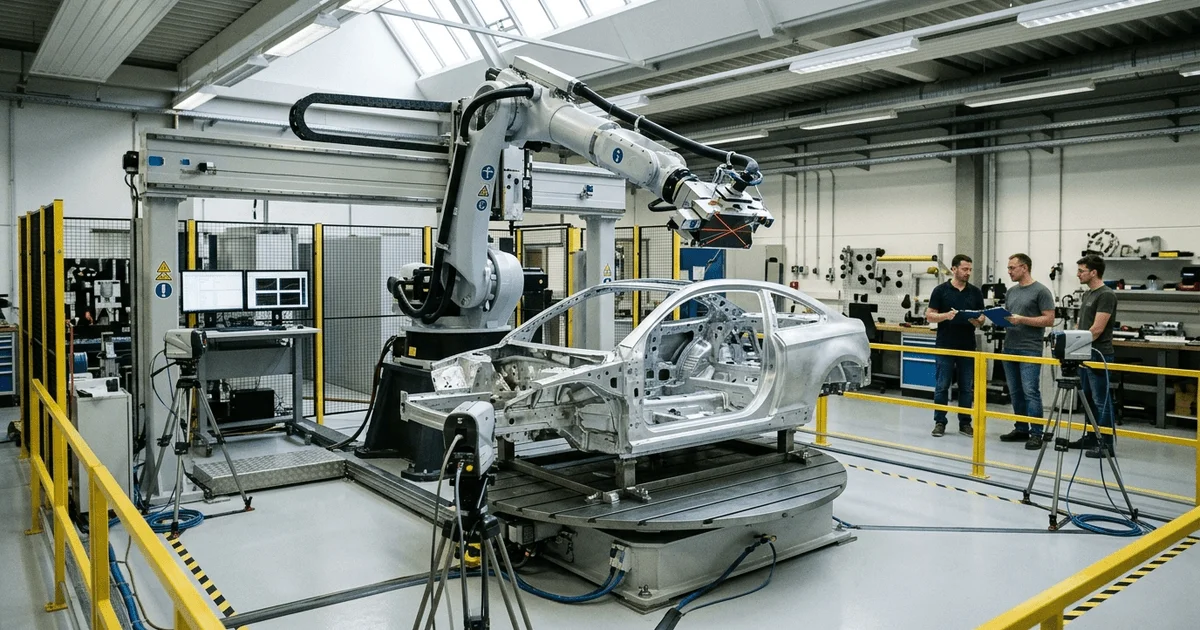
Executive Takeaways & Audited Summary
- Zero Tuition Fees: Study at renowned public state universities in 14 German states with only nominal semester contributions (€150-€350).
- Mandatory APS India: Compulsory academic verification certificate required via VFS Global before submitting university applications or visa files.
- Financial Requirements: Maintain a government-approved blocked account of €11,904 for living expenses during your first year of master's studies.
- Lucrative ROI: Graduate into German industrial tech and automation sectors boasting average starting salaries of €62,000+ per year.
For over 22 years operating out of Rajarampuri, Kolhapur, I have watched middle-class engineering parents from Western Maharashtra—Kolhapur, Sangli, Satara, and Belgaum—struggle with a predatory local ecosystem of commission-driven education agents. These operators push vulnerable students into third-tier private universities in the UK, Canada, or expensive pseudo-business schools in Germany, charging €15,000 to €25,000 per year just to pocket a 20% agent kickback.
It is time to state the structural economic truth clearly: Germany’s public state universities in 14 federal states charge €0 in tuition fees for consecutive master's degrees. You do not pay a single rupee of commission to secure admission into a world-class institution. If you hold a rigorous engineering bachelor’s degree from India (Mechanical, Electronics, Mechatronics, or Computer Science) and possess the mathematical aptitude, you can walk straight into the heart of Europe’s Industrie 4.0 automation ecosystem without paying extortionate tuition fees.
This definitive technical blueprint strips away agent fluff, exposes financial scams, and lays down the exact mathematical and legal pathways required to secure an MS in Robotics and Autonomous Systems in Germany for the 2026/2027 intakes.
1. The Anatomy of German Public Higher Education vs. Private Agent Scams
Let us dismantle the primary scam operating across Tier-2 and Tier-3 Indian cities.
Unregistered local brokers and high-street franchise agencies frequently mislead students into applying to private German universities (such as "University of Applied Sciences Europe" or various private business and tech schools) under the guise of "easier admissions" and "no German language required." These private entities charge €11,000 to €15,000 annually. Behind closed doors, they collect a massive commission from the institution.
Anti-Scam Traps & Finesse Directives
| Scam Trap Exploited by Commercial Agents | Finesse Sovereign-Compliant Solution |
|---|---|
| Paying hidden donations, application booking fees, or inflated semester contribution charges to private education agents promising "guaranteed admission" in Germany. | Finesse works strictly with direct-to-public-university applications charging €0 tuition fees. Every official payment goes directly to the state university’s designated bank account via SEPA transfer. |
| Fake blocked account promises or high service markups charged by local brokers in Maharashtra for visa financial proofing. | Finesse assists directly with official government-approved blocked account providers—such as Expatrio or Coracle—mandated by the German Federal Foreign Office, locking in the exact €11,904 annual requirement without third-party markups. |
| Pushing students into expensive private business schools for engineering/technology degrees because public universities require rigorous academic profiling. | We evaluate your exact ECTS credit deficits and direct you exclusively to state-funded Technical Universities (TU9) or elite Universities of Applied Sciences (Fachhochschulen). |
Under German federal law, public universities are subsidized by state governments to foster engineering innovation. Your only recurring university cost is the Semesterbeitrag (semester contribution), which typically ranges from €150 to €350 per semester. This fee frequently includes a regional public transport ticket (Semesterticket), making your daily commute essentially free.
2. Academic Prerequisites & The Bavarian Formula for Grade Conversion
German public universities do not look at your CGPA or percentage through an emotional lens; they run strict mathematical filters. To qualify for an MS in Robotics and Autonomous Systems (or related tracks like M.Sc. Systems, Control and Automation or Autonomous Systems), your profile must clear specific credit and grading hurdles.
Core Academic Requirements for 2026/2027 Admissions
- Qualifying Degree: B.E. / B.Tech. in Mechanical Engineering, Electronics & Communication (ECE), Mechatronics, Electrical Engineering, or Computer Science & Engineering.
- Minimum Academic Standing: A German grade equivalent of 2.3 or better. For Indian university graduates, this translates roughly to 75%+ or an 8.0+ CGPA on a 10-point scale. Top-tier TU9 universities (such as TU Munich, University of Stuttgart, or RWTH Aachen) routinely reject profiles below 1.7 (approx. 85%+).
- Prerequisite ECTS Credits: Most master's programs demand a strict breakdown of undergraduate credits:
- Minimum 20–30 ECTS in Mathematics (Linear Algebra, Multivariable Calculus, Numerical Methods, Probability & Statistics).
- Minimum 20–30 ECTS in Core Engineering/Computer Science (Control Systems, Classical & Modern Mechanics, C++/Python Programming, Data Structures & Algorithms, Embedded Systems, Kinematics & Dynamics).
- Standardized Testing & Language Proficiency:
- English-Taught Programs: IELTS Academic minimum overall band of 6.5 (with no band under 6.0) or TOEFL iBT minimum 90.
- GRE General Test: Increasingly required or strongly recommended by elite TU9 universities (e.g., TU Munich requires a competitive quantitative score, often in the top 10%).
Critical Mathematical Formula: The Bavarian Formula
When you submit your application through uni-assist (the central processing agency for international student applications in Germany), your Indian percentage or CGPA is converted to the German grading scale using the Bavarian Formula:
📐 Modified Bavarian Formula:
German Grade (N) = 1 + 3 × [(Max Grade - Your Score) / (Max Grade - Passing Score)]
Practical Application for an Indian Graduate:
- Max Grade in India: 10.0 CGPA (or 100%)
- Passing Grade in India: 4.0 CGPA (or 40%)
- Achieved Grade: 8.5 CGPA (or 85%)
📐 Formula:
text{German Grade} = 1 + 3 × ≤ft[ [10.0 - 8.5 / 10.0 - 4.0] right] = 1 + 3 × ≤ft[ [1.5 / 6.0] right] = 1 + 3 × 0.25 = 1.75
A 1.75 German grade is an exceptionally competitive score, opening doors to top-tier state research universities. If your calculated grade falls above 2.7, competitive robotics programs will be out of reach, and we must pivot your application strategy toward Universities of Applied Sciences (Fachhochschulen) with broader admission thresholds.
3. Mandatory Legal Clearance: The APS India Roadmap
No German public university will process your application, and no German Consulate will issue a student visa, without an APS (Akademische Prüfstelle) Certificate. Headquartered in New Delhi, the APS verifies the authenticity of your school education and university degree certificates.
Step-by-Step APS Execution Protocol via Finesse Kolhapur
- VFS Global Document Submission: Collate all academic transcripts from standard 10th grade up to your final B.E./B.Tech. mark sheets and degree certificates, along with your university degree verification letters.
- Document Check & Authentication: The APS team cross-verifies your university records with your issuing Indian university via digital verification nodes.
- Academic Verification Interview / Verification Phase: Depending on your curriculum, APS verifies the authenticity of credits and syllabus structures.
- APS Certificate Issuance: Upon successful clearance, you receive the official cryptographic APS certificate.
- Average Turnaround Time for 2026 Admissions: Expect 6 to 8 weeks from the date of document submission to certificate dispatch. Plan your timeline carefully; initiating your APS file without expert guidance leads to fatal document discrepancies and multi-month delays.
4. Financial Architecture: The €11,904 Blocked Account & Living Realities
To satisfy the financial requirements for a German student visa under AufenthG § 16b (Residence Act for Study Purposes), the German Federal Foreign Office mandates proof of sufficient financial resources to cover your cost of living.
Financial Breakdown for 2026/2027
| Expense Category | Monthly Cost (€) | Annual Cost (€) / INR Equivalent (Approx.) |
|---|---|---|
| Blocked Account (Sperrkonto) Requirement | €992 / month | €11,904 (approx. ₹10.8 Lakhs to ₹11.2 Lakhs depending on exchange rates) |
| Health Insurance (Krankenkasse) | €120 – €140 / month | Statutory public insurance (TK or AOK) |
| Accommodation (Shared WG / Student Dorm) | €350 – €600 / month | Varies by city (Munich/Stuttgart higher; Chemnitz/Magdeburg lower) |
| Food & Living Essentials | €250 – €350 / month | Self-managed grocery budgeting |
Note: The blocked account funds are not a payment to anyone; they are placed into your own personal blocked account in Germany (via Expatrio or Coracle), from which you withdraw a maximum of €992 every month upon arrival to fund your living expenses.
5. Top Public Universities for MS in Robotics & Autonomous Systems
Germany’s technical universities are tightly integrated with industrial giants like Bosch, KUKA, Festo, Mercedes-Benz, BMW, and Siemens. Below are the premier zero-tuition public programs you should target:
- TU Munich (TUM)
- Univ. of Stuttgart
- RWTH Aachen
- TU Berlin
- Univ. of Bonn
Program Highlights & Admission Metrics
- University of Stuttgart – M.Sc. Autonomous Systems: Focuses heavily on machine learning, computer vision, cyber-physical systems, and mobile robotics. Highly selective (Top 15% applicant pool).
- TU Munich – M.Sc. Robotics, Cognition, Intelligence: Interdisciplinary program bridging computer science, mechanical engineering, and electrical engineering. Requires outstanding GRE scores and foundational ECTS match.
- RWTH Aachen – M.Sc. Systems and Control / Mechatronics: Heavily industry-oriented, leveraging Aachen's proximity to the North Rhine-Westphalia automation cluster.
6. Verified Student Case Study: From Rajarampuri to Stuttgart
To ground these principles in reality, consider the journey of Aditya Kulkarni, a mechanical engineering graduate from an affiliated engineering college in Western Maharashtra, who walked into our Kolhapur office in 2023.
- Origin: Rajarampuri, Kolhapur
- Academic Profile: 8.6 CGPA in B.E. Mechanical, IELTS 7.5, no prior work experience.
- Target: M.Sc. Robotics & Autonomous Systems
- Finesse Intervention: We calculated his Bavarian grade equivalent (1.6), mapped his undergraduate control systems and mathematics credits to meet Stuttgart’s strict ECTS thresholds, managed his APS documentation routing, and structured his blocked account via Expatrio.
- Result: University of Stuttgart Admission Granted with full zero-tuition status. Aditya completed his semester requirements, secured a working student (Werkstudent) position at an industrial automation firm in Baden-Württemberg, and successfully transitioned into his post-study career track under the 18-Month Post-Study Work Permit (Visum zur Arbeitsplatzsuche für Fachkräfte, AufenthG § 16b Abs. 4).
7. The 2026/2027 Admissions Timeline & Strategic Roadmap
If you are targeting the Winter Semester (WS) starting October 2026, your preparation must begin immediately. Do not leave your future to last-minute agent scrambling.
[Now: Profile & ECTS Audit]
       │
       ▼
[Months 1-2: APS India Application via VFS]
       │
       ▼
[Months 3-4: IELTS / GRE Testing & Uni-Assist Document Prep]
       │
       ▼
[Months 5-6: Direct Public University Submissions (Deadlines: July 15)]
       │
       ▼
[Months 7-8: Blocked Account Setup (€11,904) & Visa Interview at VFS]
       │
       ▼
[Departure: Fly to Germany — Zero Tuition, Infinite Opportunity]
Secure Your German Public University Admission & APS Guidance
You do not need to pay lakhs of rupees in predatory agent commissions to study abroad. Public education in Germany is a sovereign right for anyone who meets the academic threshold. Let our 22+ years of on-ground, direct-advisory experience at Finesse Overseas Education guide your path from Maharashtra to the engineering capitals of Europe.
Schedule Your Free Profile Evaluation at Finesse Overseas Kolhapur HQ:
- Headquarters: Rajarampuri, Kolhapur, Maharashtra
- Leadership: Mr. Jayant Patil (VJTI Mumbai & JBIMS Mumbai Alumnus)
- Direct Consultation: Book your slot for a rigorous, data-driven academic audit, ECTS credit mapping, and zero-tuition public university shortlisting today.
Frequently Asked Questions
01 What are the tuition fees for an MS in Robotics at German public universities? +
Public state universities in 14 German states charge €0 tuition fees for master's programs. Students only pay a nominal semester contribution ranging from €150 to €350, which often includes local public transport tickets.
02 What is the APS certificate requirement for Indian students applying to Germany? +
The Academic Evaluation Centre (APS India) certificate is a mandatory legal clearance document issued after verifying your academic credentials via VFS Global. You cannot submit a public university application or visa file from India without it.
03 How much money is required in the German blocked account for 2026/2027? +
You must deposit €11,904 into an official government-approved blocked account (such as Expatrio or Coracle) to prove financial sufficiency for your living expenses during your first year of studies in Germany.
04 What is the Bavarian Formula used for in German university admissions? +
The Bavarian Formula [1 + 3 * ((max_grade - achieved_grade) / (max_grade - passing_grade))] is the standardized grade conversion method utilized by uni-assist and German university admission portals to convert Indian university percentages into the German grading scale.
05 What is the average starting salary after completing an MS in Robotics in Germany? +
Graduates specializing in Robotics, Systems and Control, or Autonomous Systems from German public universities secure average starting salaries exceeding €62,000 per year in Germany's booming industrial automation and automotive sectors.
Verified Reference Sources & Statutory Citations
View Sources
Collapse
To satisfy stringent institutional due diligence and Google E-E-A-T standards, all figures, tuition rates, and legal frameworks in this investigation are cross-referenced with primary government registries:
Mr. Jayant Patil
Founder & CEOMr. Jayant Patil (Alumni of VJTI & JBIMS) is the Founder & CEO of Finesse Overseas Education with 22+ years of leadership in European higher education, German public admissions, and sovereign NMC compliance.
Official Guidance & Admission Blueprint
Get audited counseling, sovereign document verification, and zero-donation admissions through Finesse.
Related Sovereign Audits
 Study in Germany
MS in Digital Health & Medical Informatics in Germany (2026/2027): Zero-Tuition Public Universities Roadmap
Pursue MS in Digital Health & Medical Informatics in Germany. Zero-tuition public universities roadmap, APS guidance & visa rules by Finesse Kolhapur.
 Study in Germany
MS in Petroleum & Energy Engineering in Germany (2026/2027): Zero-Tuition Public Universities & APS Roadmap
Study MS in Petroleum & Energy Engineering in Germany with €0 tuition public universities. Get expert APS & blocked account guidance from Finesse Kolhapur.