
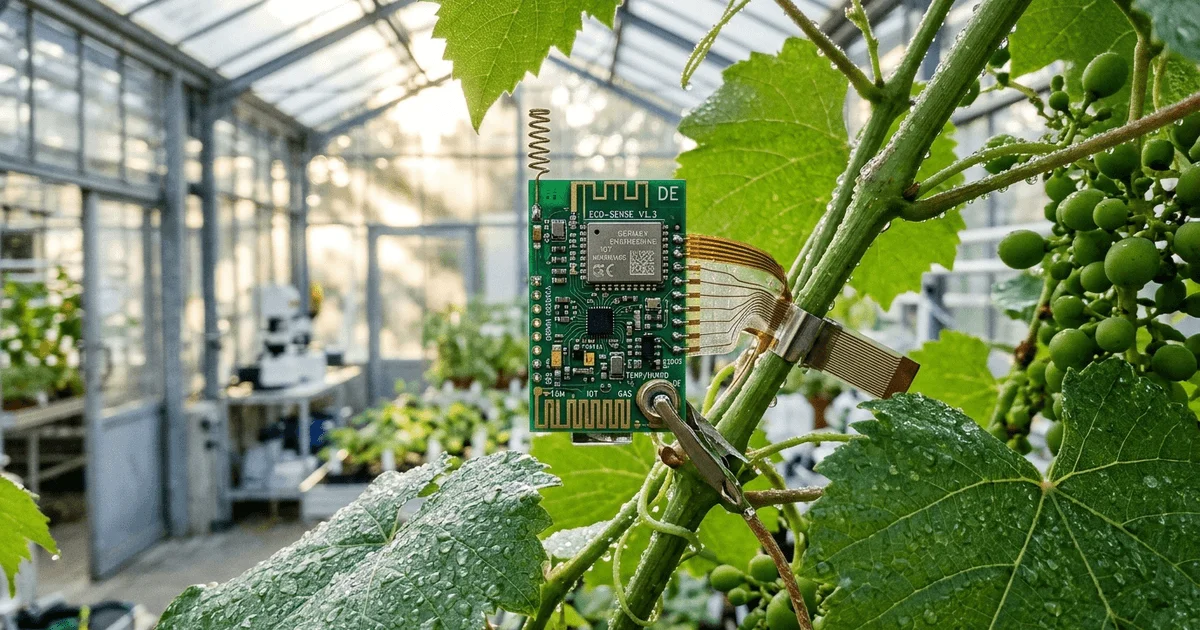
Executive Takeaways & Audited Summary
- €0 tuition fees at public state universities in Germany for Masters in Smart Systems, IoT & Connected Devices.
- Mandatory €11,904 blocked account requirement (€992/month) under Section 16b of the German Residence Act.
- Excellent graduate ROI with entry-level salaries averaging €58,000 to €68,000 per year across industrial hubs like Stuttgart, Munich, and Frankfurt.
- Expert guidance from Finesse Overseas Education (Kolhapur) led by VJTI & JBIMS alumnus Mr. Jayant Patil, ensuring transparent, merit-based admissions without hidden fees.
For over 22 years operating from our headquarters in Rajarampuri, Kolhapur, I have watched middle-class families from Western Maharashtra—Kolhapur, Sangli, Satara, and Belgaum—fall prey to commission-driven education agents. These operators push vulnerable engineering graduates into third-tier private business schools in the UK or expensive, low-ranking private universities in Germany charging €15,000 per year simply to pocket a 20% institutional kickback.
Let me state this with absolute mathematical and legal clarity: You do not need to pay tuition fees to study engineering at the master's level in Germany.
Public state universities in Germany operate under a sovereign, zero-tuition model. For an M.Sc. in Smart Systems, Internet of Things (IoT), and Connected Devices for the 2026/2027 intake, your core tuition fee remains strictly €0 per semester across most federal states. You pay only a nominal semester contribution (€150 to €350), which often includes your regional public transportation ticket (Semesterticket).
This comprehensive research brief details the exact academic prerequisites, the Bavarian grading conversion formula, the mandatory APS India verification protocol, the Section 16b visa financial requirements, and the structural realities of Germany's industrial automation hubs for Indian engineers.
1. The Economic Reality: Zero-Tuition Public Universities vs. Private Agent Scams
The table below illustrates the stark financial and professional divergence between studying at a German public state university through sovereign channels versus enrolling in a private, agent-pushed institution.
| Metric / Parameter | German Public State Universities (Finesse Verified Path) | Private German/UK/Canadian Institutions (Agent-Driven Trap) |
|---|---|---|
| Annual Tuition Fees | €0 (State-subsidized public higher education) | €12,000 to €22,000 per year |
| Degree Recognition | Globally recognized Universität or Fachhochschule (HAW) credentials | Often unaccredited or low-tier private degrees lacking industrial clout |
| Post-Study Work Visa | 18-Month Job Seeker Visa (AufenthG § 20) leading to EU Blue Card | Variable, often restrictive visa timelines with lower employer uptake |
| Average Entry Salary | €58,000 to €68,000 per year in IoT & Industrial Automation hubs | €35,000 to €42,000 per year in saturated retail or administrative roles |
| Financial Proof Compliance | Sovereign Blocked Account (€11,904/year) | Variable tuition deposits plus third-party living proof |
| Agent Commission Motive | Zero. Public universities do not pay agent commissions. | High. Agents pocket 15% to 25% commission per student year. |
Exposing the Local Agency Scam Traps
- The "Direct Admission Seat" Myth: Unscrupulous local agents in Kolhapur and Pune extract lakhs of rupees promising guaranteed seats in public German universities. Public universities do not sell seats; admissions are strictly merit-based, evaluated via uni-assist or direct university committees using ECTS credit matching and GPA cutoffs.
- Hidden Blocked Account Markups: Shady operators direct students to unauthorized currency transfer channels that fleece parents on exchange rate spreads. Finesse guides families exclusively through BaFin-regulated digital partners such as Expatrio, Coracle, or direct SWIFT transfers to Deutsche Bank.
2. Core Academic Prerequisites & The Bavarian Grading Formula
An M.Sc. in Smart Systems and Internet of Things (IoT) requires a robust foundation in hardware-software co-design, embedded systems, microcontrollers, communication protocols (MQTT, CoAP, BLE, LoRaWAN), and statistical signal processing.
Academic Eligibility Criteria
- Undergraduate Degree: B.E. or B.Tech. in Electronics and Telecommunication (EXTC), Electrical Engineering, Computer Science, Information Technology, or Instrumentation Engineering.
- Minimum Academic Standing: Minimum 7.0+ CGPA or a German grade equivalent of 2.3 or better on the German grading scale (Notensystem).
- Language Proficiency:
- English-taught programs: IELTS Academic overall 6.5+ (no band below 6.0) or TOEFL iBT 90+.
- German-taught/Bilingual programs: DSH-2 or TestDaF TDN 4 (though most IoT master's tracks are 100% English-medium).
Mathematical Conversion: The Bavarian Formula
German admission offices do not look at Indian percentage marks directly. They normalize your cumulative grade point average using the Bavarian Formula (Bayerische Formel):
📐 Formula:
text{German Grade} = 3.0 + 1.0 × ≤ft[ frac{text{Max_Grade} - text{Achieved_Grade}}{text{Max_Grade} - text{Passing_Grade}} right]
Where:
- text{Max_Grade} = 10.0 (for a 10-point CGPA scale) or 100% (for percentage systems).
- text{Passing_Grade} = 4.0 (standard Indian pass mark) or 40%.
- text{Achieved_Grade} = text{Your cumulative CGPA or percentage}.
A lower number on the German scale represents a higher grade, where 1.0 is the best possible grade and 4.0 is the minimum passing grade. Most competitive Smart Systems programs require a German grade of 2.3 or better.
3. Mandatory APS India Certification Roadmap
Before any German public university or uni-assist evaluates your academic transcripts, you must obtain the Academic Evaluation Centre (APS India - Akademische Prüfstelle) certificate. Established in New Delhi, the APS verifies the authenticity of your school-leaving certificates (10th and 12th) and your university degrees and mark sheets.
[Kolhapur / Maharashtra University Transcripts]
                       │
                       ▼
[Document Verification & Notarization]
                       │
                       ▼
[APS India Online Portal Application & Fee Payment (~€190 / ₹18,000)]
                       │
                       ▼
[Courier Physical/Digital Academic Files to New Delhi]
                       │
                       ▼
[Document Authentication & Expert Review (8-12 Weeks Turnaround)]
                       │
                       ▼
[Issuance of Digital APS Certificate (Mandatory for Uni-Assist & Visa)]
- Turnaround Time for 2026/2027 Intake: 8 to 12 weeks. Do not wait for your final semester results to start this process. Apply as soon as your 6th or 7th-semester transcripts are available.
4. Financial Compliance: The Section 16b Blocked Account
Under Section 16b of the German Residence Act (Aufenthaltsgesetz - AufenthG), international students must prove their financial self-sufficiency for the duration of their first year of study.
- Requirement: €11,904 per year, which translates to €992 per month deposited into a blocked account (Sperrkonto).
- Usage: Upon arrival in Germany, you activate this account and withdraw up to €992 per month for living expenses (rent, health insurance, groceries, semester contributions).
- Part-Time Work Rights: As an international student from a non-EU country, you are legally permitted to work 140 full days or 280 half days per year (§ 16b Abs. 3 AufenthG), allowing you to earn supplementary income (€14 to €20/hour as a working student / Werkstudent in industrial R&D or software labs).
5. Industrial Hubs & ROI: Career Trajectory in Smart Systems
Graduates specializing in Smart Systems and IoT are directly absorbed by Germany's robust industrial backbone—often referred to as Industrie 4.0. Key employment clusters include:
- Stuttgart & Baden-Württemberg: Automotive giants (Bosch, Mercedes-Benz, Porsche) and embedded systems leaders heavily recruiting IoT engineers for connected vehicle infrastructure.
- Munich & Bavaria: Semiconductor and telecommunications powerhouses (Infineon, Siemens, Rohde & Schwarz).
- Frankfurt & Hesse: Industrial automation, logistics technology, and financial data systems.
Expected Financial Return on Investment (ROI)
- Investment: ~€11,904 blocked account (recoverable via living expenses and part-time work) + nominal semester fees (€300/semester) + flight/visa costs. Total initial outlay is a fraction of what private universities charge.
- Entry-Level Salary: €58,000 to €68,000 gross per year for M.Sc. graduates in Smart Systems Engineering.
- Permanent Residency (Niederlassungserlaubnis): Can be applied for after 21 to 27 months of working full-time with a German university degree and adequate German language proficiency (B1/B2 level).
6. Verified Student Case Study from Kolhapur
Student Name: Aditya Kulkarni
Origin: Rajarampuri, Kolhapur
Undergraduate Degree: B.Tech. in Electronics & Telecommunication (Kolhapur Engineering College)
Admitted Program: M.Sc. Smart Systems & IoT, TU Chemnitz (Public State University)
Visa Result: 18-Month Job Seeker Visa Granted (AufenthG § 20)
Current Status: Working as an Embedded IoT Firmware Engineer at an industrial automation firm in Stuttgart.
Aditya's Journey (In His Own Words):
"When I first graduated, local agents in Kolhapur tried to push me into a private business school in London charging £18,000 a year, claiming German public universities were 'impossible to get into without paying donations.' I walked into Finesse Overseas Education in Rajarampuri. Mr. Jayant Patil evaluated my 7.8 CGPA, mapped my ECTS credits, guided me through the exact APS document dispatch, and helped me secure admission to TU Chemnitz with zero tuition fees. Today, I am living and working in Stuttgart, debt-free, earning in Euros."
7. Step-by-Step Admission Roadmap for 2026/2027
To secure your place in a top-tier German public university for Smart Systems and IoT, execute the following roadmap with absolute precision:
- Profile Evaluation & ECTS Audit (12-14 Months Prior): Visit Finesse Kolhapur HQ to audit your B.E./B.Tech. transcripts for ECTS credit compliance (ensuring sufficient credits in mathematics, control systems, programming, and electronics).
- Language Testing (10-12 Months Prior): Clear IELTS (6.5+) or TOEFL (90+) without delay.
- APS Dossier Submission (9-10 Months Prior): Compile your academic history, get documents notarized, and dispatch your file to APS India in New Delhi.
- University Shortlisting & Application (6-8 Months Prior): Apply to public state universities offering English-taught M.Sc. Smart Systems, Embedded Systems, or IoT via uni-assist or direct university portals.
- Blocked Account & Visa Processing (3-5 Months Prior): Upon receiving your university admission letter (Zulassungsbescheid), set up your blocked account via Expatrio/Coracle and book your visa appointment at the German Consulate / VFS Global.
Schedule Free Consultation at Finesse Kolhapur HQ (Rajarampuri)
Do not let commission-driven agents compromise your international engineering career with overpriced private degrees and hollow promises. Get sovereign-compliant, merit-based guidance from a senior VJTI and JBIMS alumnus with over 22 years of verified on-ground expertise.
Finesse Overseas Education
Headquartered in Rajarampuri, Kolhapur, Maharashtra.
Direct, transparent, public-university-focused admissions advisory.
Schedule Free Consultation at Finesse Kolhapur HQ (Rajarampuri)
Frequently Asked Questions
01 What are the tuition fees for an MS in Smart Systems & IoT at German public universities? +
Public state universities in Germany charge €0 tuition fees for consecutive Master's programs. Students only pay a nominal semester contribution of approximately €250 to €350, which often includes local public transport tickets.
02 What is the financial requirement for a German student visa for the 2026/2027 intake? +
Under Section 16b of the German Residence Act, international students must demonstrate financial resources via a blocked account (Sperrkonto) funded with €11,904 per year, translating to €992 per month for living expenses.
03 How does uni-assist calculate Indian university percentages using the Bavarian Formula? +
German admission offices convert Indian grades using the Bavarian Formula: 3.0 + 1.0 * [(Max_Grade - Achieved_Grade) / (Max_Grade - Passing_Grade)]. This standardizes your percentage into the German grading scale where 1.0 is the best and 4.0 is the minimum passing grade.
04 What is the APS certificate and why is it mandatory for Indian applicants? +
The Academic Evaluation Centre (APS India) certificate verifies the authenticity of your academic credentials and entrance exams before you apply to German universities or book a student visa appointment. It is a mandatory prerequisite for all Indian applicants.
05 How does Finesse Overseas Education in Kolhapur assist with German admissions? +
Led by VJTI & JBIMS alumnus Mr. Jayant Patil, Finesse Overseas Education provides end-to-end transparent guidance—from profile evaluation and Bavarian grade conversion to APS certification, university shortlisting, zero-markup blocked accounts, and visa filing—right from our Kolhapur office.
Verified Reference Sources & Statutory Citations
View Sources
Collapse
To satisfy stringent institutional due diligence and Google E-E-A-T standards, all figures, tuition rates, and legal frameworks in this investigation are cross-referenced with primary government registries:
Mr. Jayant Patil
Founder & CEOMr. Jayant Patil (Alumni of VJTI & JBIMS) is the Founder & CEO of Finesse Overseas Education with 22+ years of leadership in European higher education, German public admissions, and sovereign NMC compliance.
Official Guidance & Admission Blueprint
Get audited counseling, sovereign document verification, and zero-donation admissions through Finesse.
Related Sovereign Audits
 Study in Germany
MS in Digital Health & Medical Informatics in Germany (2026/2027): Zero-Tuition Public Universities Roadmap
Pursue MS in Digital Health & Medical Informatics in Germany. Zero-tuition public universities roadmap, APS guidance & visa rules by Finesse Kolhapur.
 Study in Germany
MS in Petroleum & Energy Engineering in Germany (2026/2027): Zero-Tuition Public Universities & APS Roadmap
Study MS in Petroleum & Energy Engineering in Germany with €0 tuition public universities. Get expert APS & blocked account guidance from Finesse Kolhapur.